Kia Carnival V6
$37,3902026 LX · Base MSRPThe lowest base sticker among these three candidates. The research question: how much of the upfront advantage survives years of fuel bills?
Manufacturer pricing ↗
Some say it’s a symptom of manliness. Others, a cause. The minivan.
Real stats. Questionable decisions.
You used to judge a vehicle by what happened when you stepped on the gas. Now you judge it by whether you can load a stroller without dismantling it in the rain. Sliding doors don’t signal surrender. They signal that somebody finally did the math.
The best minivan is the one that handles your family’s routine without making every errand a production. That might mean fewer fuel stops. It might mean getting a third child into the back row. Or it might mean picking up a dresser without first finding a home for two enormous seats.
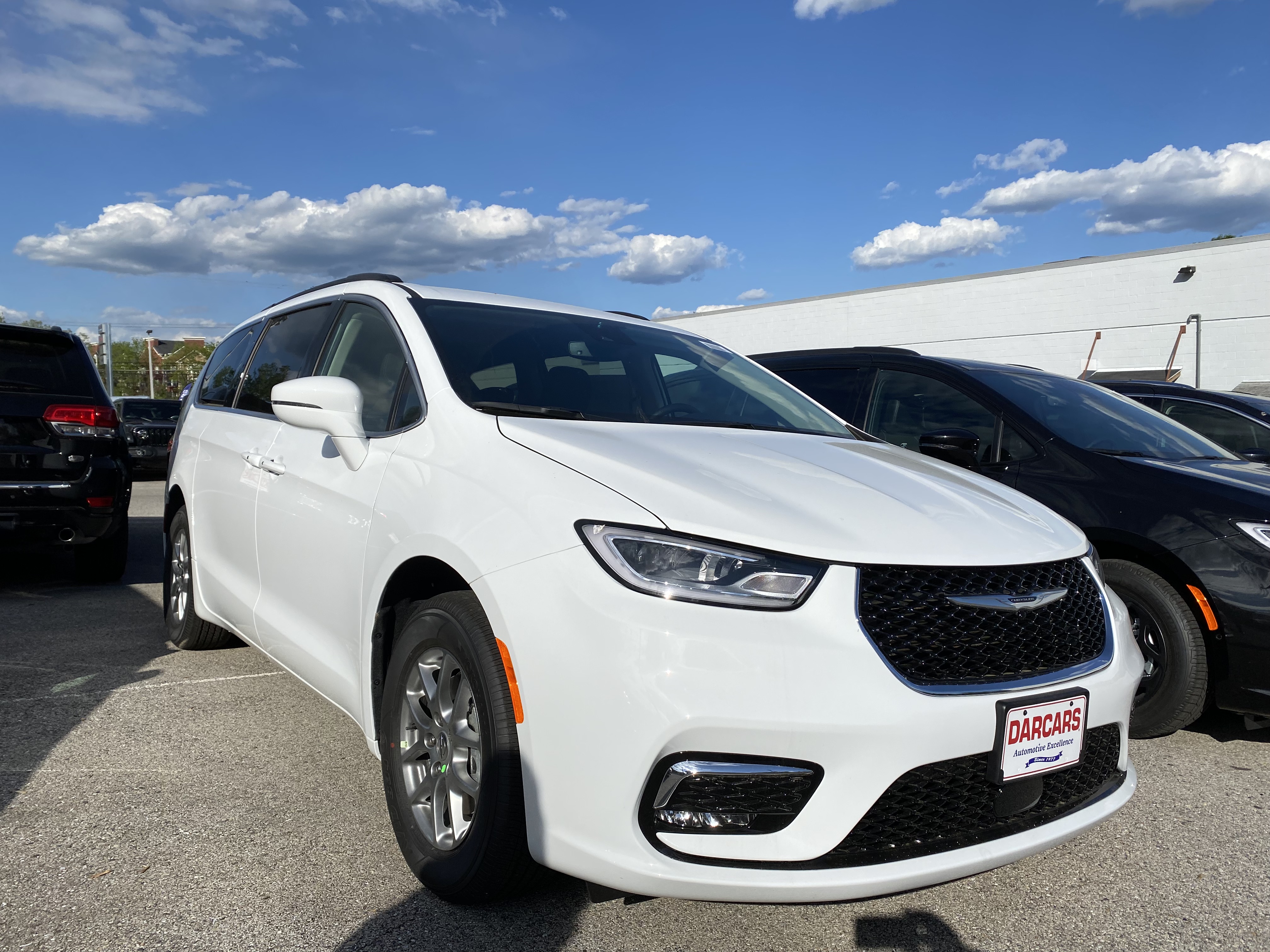
School shuttle in the morning. Furniture hauler in the afternoon. The Pacifica’s Stow ’n Go turns that switch into a much smaller project: fold the second-row seats into the floor instead of lifting them out and storing them in the garage.
For a family that actually uses that flexibility, it deserves a place near the top of the shopping list. The catch is in the configuration: Chrysler identifies second-row Stow ’n Go on the 2026 gas Select and Limited. The fanciest badge is not automatically the most useful van.
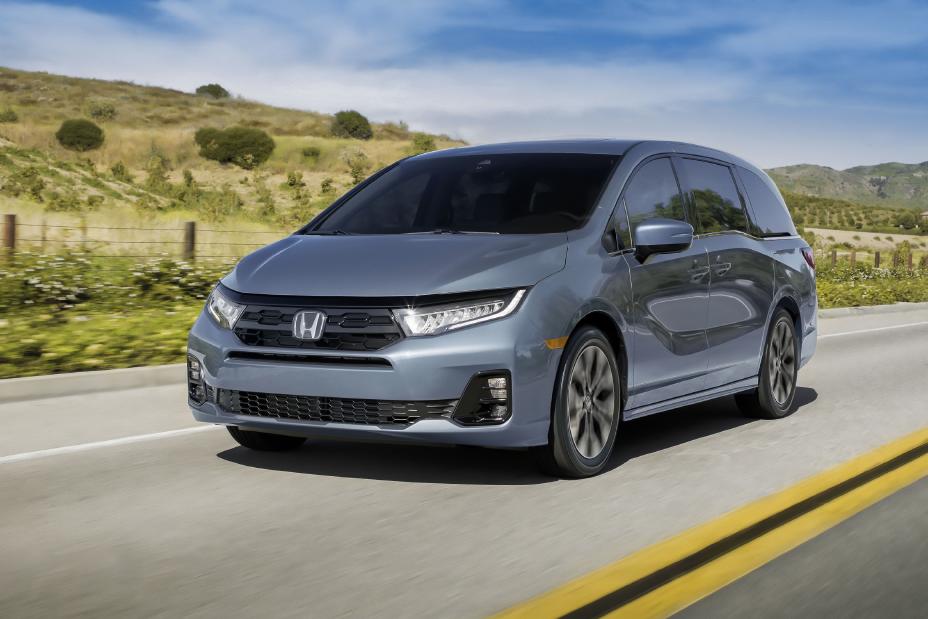
Honda’s Magic Slide second row is worth a look when getting kids into place is the daily challenge. The core seating system comes across the 2026 lineup, so you don’t have to climb to the top trim to get it.
Start with EX-L. Look at Touring if a rear-seat camera, parking sensors and extra third-row conveniences would earn their keep. Seats that move around are useful; seats that disappear into the floor solve a different problem.
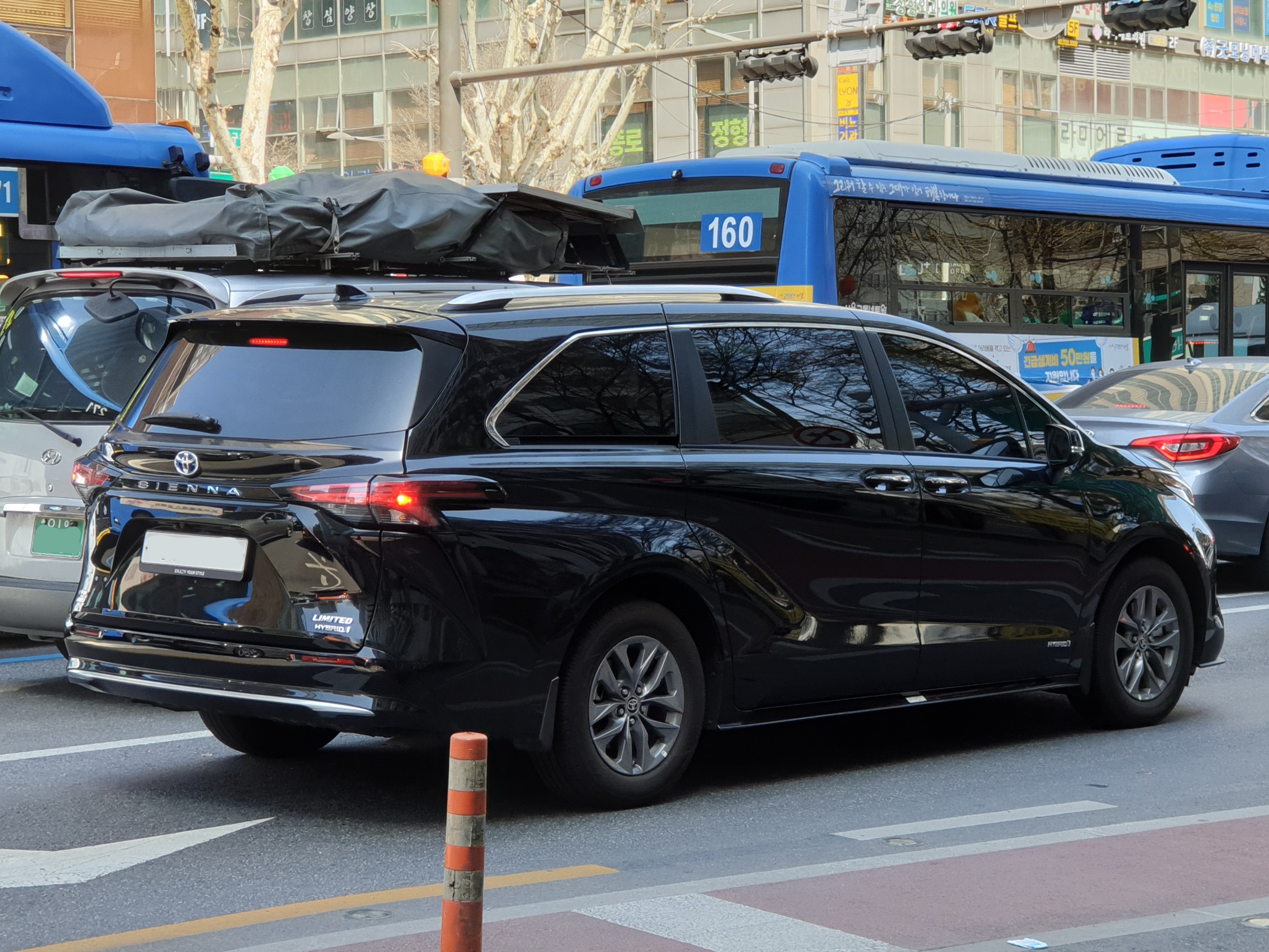
If your calendar is mostly school, practice, another practice and a weekend drive, the Sienna’s fuel-economy case belongs in the conversation. But the useful comparison is what you pay for the van and how much you drive—not an MPG number floating by itself.
LE versus XLE is a sensible starting point. XLE adds conveniences such as heated front seats, four-zone climate control and hands-free sliding doors. Before paying for the next rung, decide whether you need it or simply enjoyed sitting in the showroom version.
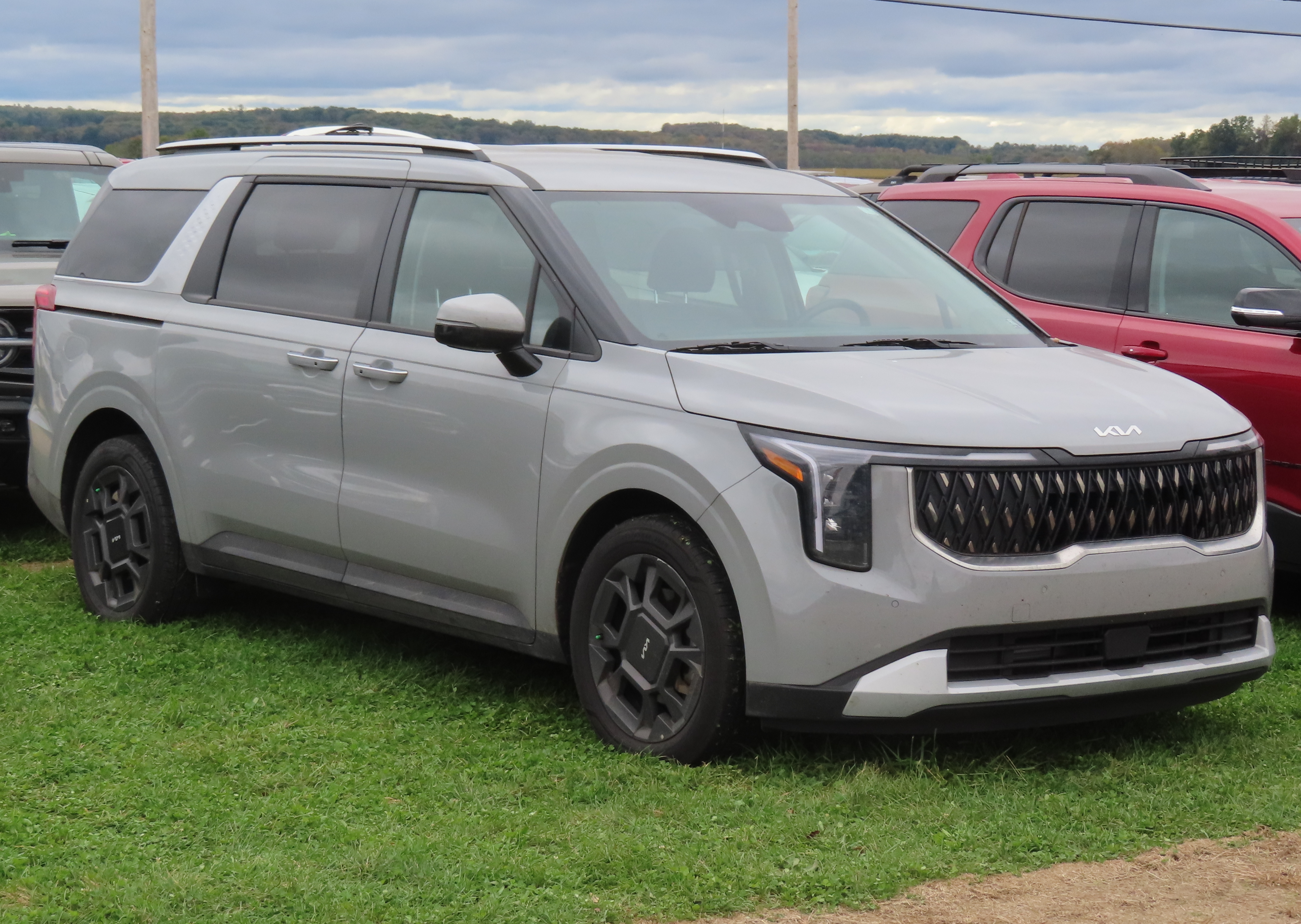
Kia gives you gas and hybrid choices, plus a wide trim ladder. LXS versus EX is where we’ll start checking what the extra money buys; compare gas and hybrid within the same trim.
The lounge seats sound like vacation already started. Just know that Kia excludes its VIP seats from second-row removability. Comfort can be a worthwhile upgrade—and still be the wrong choice for the family that regularly loads bulky cargo.
Our starting point: 2026 U.S. models, manufacturer base MSRPs before destination, taxes, options and dealer fees. These are different entry trims—not an equipment-matched buying verdict. Newer model years and actual offers belong in the next research pass.
The lowest base sticker among these three candidates. The research question: how much of the upfront advantage survives years of fuel bills?
Manufacturer pricing ↗A hybrid starting in LXS trim. Compare it with the $39,390 V6 LXS for a more useful trim-level starting point; confirm equipment before treating the $2,000 gap as a pure hybrid premium.
Manufacturer pricing ↗Up to 36 city / 36 highway mpg, with AWD available. The research question: does a real dealer quote preserve its value case?
Manufacturer pricing ↗| Also in the running | Reason to look | What we still need |
|---|---|---|
| Honda Odyssey 2026 · $42,795 base MSRP | Magic Slide second-row seating; 22 combined mpg. | Car-seat access, comparable equipment and real purchase price. |
| Chrysler Pacifica | Available second-row Stow ’n Go seats fold into the floor. | Verified trim pricing, incentives and ownership-cost evidence. Don’t assume every configuration has the same seating system. |
| Used minivans | A separate route to a lower purchase price. | Local listings matched by year, mileage, condition and warranty. |
A lower sticker, a lower fuel bill and an easier seating system can point to different vans. Our verdict needs actual prices, family habits and a closer look at everyday comfort and convenience.
A family van earns its keep in the transitions: loading a rear-facing car seat, reaching the third row, carrying a stroller with every seat occupied, and making room for a bulky purchase. Fuel economy matters. So does avoiding a seat-removal workout.
On the 2026 gas Pacifica Select and Limited, second-row seats fold into the floor. You keep the seats with the van instead of lifting them out and finding somewhere to store them. With those seats upright, the floor compartments provide storage. That is a concrete convenience advantage for families who regularly alternate passengers and cargo.
Configuration matters: Chrysler lists second-row Stow ’n Go on Select and Limited, not across every Pacifica. Verify the exact vehicle. Remove child restraints and clear the storage wells before stowing seats; folding a seat is not the same as leaving an installed car seat in place. [P1]
| Family job | What the research shows | What to test in person |
|---|---|---|
| Passenger-to-cargo switch | Pacifica Select/Limited: second-row floor stowage. Carnival: regular second-row seats are removable; VIP lounge seats are excluded from removability. Odyssey: removable second-row seats, with Magic Slide for daily rearranging. [P1][P2][P3] | Do the task yourself. Where do removed seats go? Can you lift them comfortably? How much space remains with your preferred seating layout? |
| Car seats and third-row access | Odyssey has Magic Slide on all 2026 trims. Sienna XLE adds Super-Long Slide captain’s chairs. These solve different access problems from floor-folding seats. [P2][P4] | Install your actual restraints. Check access, buckling and clearance with three children; don’t assume sliding or tilting is permitted with every restraint installed. |
| Keeping everyone comfortable | Odyssey includes tri-zone climate control and second-row shades across trims; Touring adds third-row shades. Sienna LE has three-zone climate control; XLE adds four-zone. [P2][P4] | Sit in every row. Check vent location, cooling, sunlight, adult legroom and seat support—not just the climate-control label. |
| Checking the back seat | Odyssey Touring/Elite add CabinWatch; CabinTalk is included across the 2026 range. Pacifica offers FamCAM, with equipment/package availability to verify. [P2][P5] | Check camera coverage with rear-facing seats, ease of controls and whether the feature needs an expensive package. |
| Long-drive comfort | Odyssey Elite adds ventilated front seats, heated steering wheel and extra acoustic door glass. Sienna Limited/Platinum add ventilated front seats and second-row ottomans. [P2][P4] | A longer test drive on the same roads. Compare ride, wind/tire noise and seat support. These have not been road-tested by this publication. |
| Stroller, groceries and sports gear | Maximum cargo figures often require stowing or removing seats. They do not describe a fully occupied family trip. | Load the actual stroller behind the third row, then add bags. Test the tailgate with hands full and storage reachable from each seat. |
These are shopping priorities, not ranked winners. Compare each step’s real price premium with the features your family will use. Equipment varies by packages, powertrain and seating configuration; 2027 models require a separate check.
| Our contenders | Trim range to examine | First comparison | Why it matters |
|---|---|---|---|
| Chrysler Pacifica | Select · Limited · Pinnacle | Gas Select versus Limited | Start with the trims Chrysler identifies for second-row Stow ’n Go. Price the comfort upgrades separately. Pinnacle is a luxury alternative, not an automatic improvement in cargo flexibility. [P1] |
| Honda Odyssey | EX-L · Sport-L · Touring · Elite | EX-L versus Touring | EX-L already has the core sliding-seat system, heated front seats and power doors/tailgate. Touring adds CabinWatch, parking sensors, rear entertainment and third-row shades. Elite adds front-seat ventilation, heated wheel and more acoustic glass. [P2] |
| Toyota Sienna | LE · XLE · XSE · Woodland Edition · Limited · Platinum | LE versus XLE; then Limited | XLE’s heated front seats, four-zone climate and hands-free sliding doors merit a practical look. Limited adds comfort features; Platinum makes the vacuum standard. Compare seating layouts as well as equipment. [P4] |
| Kia Carnival | Gas: LX · LXS · EX · SX · SX Prestige Hybrid: LXS · EX · SX · SX Prestige | LXS versus EX; gas versus hybrid in the same trim | These are candidates for the equipment/price pass, not declared sweet spots. Compare standard seating with the optional VIP setup: lounge comfort comes with a loss of second-row removability. [P3] |
A parent who frequently changes the cabin layout may value floor-folding seats more than lounge chairs. A family taking long trips with older kids may make the opposite choice. We will report the tradeoffs before choosing winners.
Loading kids: installed restraints and third-row access. Changing jobs: seat folding, removal and storage. Daily convenience: doors, controls, storage and loading. Comfort: every row, ride and noise. Parent workload: lifting, steps and time required.
Manufacturer features are verified below. Fit, cooling performance, ride quality and seat comfort remain hands-on checks. We have not assigned invented comfort scores or converted convenience into a dollar value.
[P1] Chrysler: 2026 Pacifica seating and trims
[P2] Honda: 2026 Odyssey specifications and trim equipment
[P3] Kia: 2026 Carnival features · Hybrid features
[P4] Toyota: 2026 Sienna features by grade
[P5] Chrysler: available FamCAM
Buying the van is one bill. Living with it is a collection of them: fuel, insurance, maintenance, interest—and the value it loses while your kids grow up in the back seat.
In our Midwest benchmark, the Sienna makes the strongest five-year money case. The Pacifica asks you to decide what those disappearing seats are worth. A useful feature can earn its price every Tuesday—even when it doesn’t win the spreadsheet.
| 2026 van / configuration | Base MSRP | With destination* | Our five-year benchmark† |
|---|---|---|---|
| Pacifica Select · gas FWD | $44,445 | $46,440 | $53,707 |
| Odyssey EX-L · FWD | $42,795 | $44,290 | $47,815 |
| Sienna XLE · 8-passenger FWD | $46,020 | $47,615 | $46,512 |
| Carnival EX · gas FWD | $41,590 | $43,135 | $54,525 |
| Pacifica Select · gas AWD | $47,790 | $49,785 | $55,046 |
| Sienna XLE · 7-passenger AWD | $48,020 | $49,615 | $48,846 |
*Before taxes, dealer fees, options and discounts. †Five years / 75,000 miles; Edmunds non-fuel forecasts for Hiawatha, Iowa (52233), with fuel recalculated at a flat $3.50/gallon and each drivetrain’s combined MPG. Checked October 13, 2026. Estimates, not dealer quotes or guaranteed savings. Trims and seating differ.
The five-year bill counts depreciation: what you pay minus what the van is worth when you sell it. You still own something valuable at the end. That is why ownership cost can be less than the purchase price—and why adding the entire purchase price would count that loss twice.
Edmunds includes depreciation, financing interest, taxes and fees, fuel, insurance, maintenance and repairs. Its general assumptions include 15,000 miles a year, 10% down and a 60-month loan for a buyer with above-average credit. We used the same Iowa location for all six configurations and replaced only its fuel forecasts with our common assumptions. Actual insurance, loan rates, repairs and resale values will change the result.
Provider-modeled cash purchase prices for the four FWD vans: Pacifica Select $42,697; Odyssey EX-L $44,446; Sienna XLE $52,038; Carnival EX $42,436. Those typically equipped estimates include destination and base taxes/fees plus applicable general rebates. They differ from the base stickers and are not offers you can accept.
| Five-year cost | Pacifica Select FWD | Odyssey EX-L | Sienna XLE FWD | Carnival EX gas |
|---|---|---|---|---|
| Depreciation | $20,611 | $14,147 | $14,225 | $18,675 |
| Financing interest | $8,643 | $8,997 | $10,534 | $8,591 |
| Taxes / fees | $4,371 | $4,266 | $4,984 | $4,150 |
| Fuel · our common assumptions | $11,932 | $11,932 | $7,292 | $12,500 |
| Insurance | $4,010 | $3,818 | $4,275 | $4,231 |
| Maintenance | $3,290 | $3,927 | $4,525 | $5,790 |
| Repairs | $850 | $728 | $677 | $588 |
Calculation: benchmark = published total − published fuel + (75,000 ÷ combined MPG × $3.50). Rounded to the nearest dollar. Combined MPG: Pacifica FWD 22 / AWD 20; Odyssey 22; Sienna FWD 36 / AWD 35; Carnival gas 21. AWD rows use their own non-fuel forecasts; the Sienna AWD row has seven seats versus eight in the FWD row.
Original forecasts: Pacifica · Odyssey · Sienna · Carnival. Pricing: Chrysler · Honda · Toyota · Kia. Download the benchmark inputs.
The Carnival Hybrid needs a separate ownership forecast. Within EX, its $2,000 base-price premium buys an estimated 32 combined mpg versus 21 for gas. At our fuel assumptions, that premium is recovered in about 2.3 years of fuel savings alone; this does not account for financing, resale or other ownership costs.
Here we can hold the assumptions steady: 15,000 miles a year, $3.50 per gallon. This is the gas-money comparison—not the entire ownership bill.
Five-year fuel advantage: 36 mpg versus 22 mpg. Excludes depreciation, financing, insurance, maintenance and repairs.
The beach photo is the dream. Getting out of the driveway before the plow arrives is the more familiar assignment. If AWD is a requirement, our four-van conversation becomes a two-van shortlist: Sienna or gas Pacifica.
| 2026 contender | AWD? | What it means for the family |
|---|---|---|
| Toyota Sienna | Available | Hybrid efficiency with available electronic AWD. Compare the AWD version of your chosen trim, not its FWD starting price. |
| Chrysler Pacifica · gas | Available on Select, Limited and Pinnacle | Select/Limited AWD can pair winter traction with second-row Stow ’n Go. The plug-in hybrid is a different configuration; don’t assume it offers AWD. |
| Honda Odyssey | FWD only | Snow Mode is a traction-management setting, not an extra driven axle. |
| Kia Carnival · gas or hybrid | FWD only | Choosing the hybrid changes the powertrain, not the availability of AWD. |
If you regularly face unplowed roads, an uphill driveway or early starts before the snow crews arrive, AWD deserves weight in the purchase decision. If most trips follow maintained streets and you can wait out the worst conditions, keep the FWD vans in the conversation—and include winter tires in the budget.
Extra driven wheels help with acceleration traction. They don’t supply extra braking grip on snow and ice. Winter tires on all four wheels matter whichever van you choose; AWD is not a substitute.
For 2026, AWD adds $3,345 to Pacifica Select’s base MSRP and $2,000 to Sienna XLE’s. Destination is the same within each model. Dad Math includes separate AWD ownership benchmarks; those forecast differences are not the purchase premium.
Toyota lists 36 combined mpg for Sienna FWD and 35 for AWD. At our illustrative 15,000 miles/year and $3.50/gallon, that is about $42 extra fuel annually, or $208 over five years—before paying for the AWD option.
Chrysler lists Pacifica gas FWD at 19 city / 28 highway and AWD at 17 city / 25 highway. Compare the appropriate drivetrain’s fuel estimate when pricing it; the AWD fuel penalty is larger than the Sienna’s one-mpg combined difference. Actual winter mileage varies.
At 22 versus 20 combined mpg, Pacifica AWD uses about $239 more fuel a year, or $1,193 over five years in our example. Compare equipment-matched dealer quotes before buying; rebates and fees can change the upfront gap.
Sources: Toyota drivetrain and mileage · Chrysler AWD and seating · Honda drivetrain and Snow Mode · Kia gas configurations · Kia hybrid configurations · Michelin winter-tire guidance.
Our shortlist comes down to what your family asks the van to do most often. Here’s where we would start the test drives.
If you regularly change the cabin’s job, second-row Stow ’n Go earns its place. Add AWD to the gas-model comparison if winter traction is a priority. Start with Select; make Limited’s extras justify their price.
For families who drive often and want AWD, this is a natural starting point. Compare LE’s price with XLE’s everyday conveniences. Fuel savings deserve weight, but the actual purchase quote still matters.
Try Magic Slide with your actual car seats and see whether the layout makes loading easier. Touring is worth comparing if its camera and other family features solve a real problem. AWD shoppers will need another choice.
Compare what the trim upgrade buys, then gas versus hybrid in the same trim. Choose the seating layout before falling for the lounge chairs. Both powertrains are FWD.
These are editorial starting points based on the researched features, not road-test rankings. Bring your car seats and stroller, and compare equipment-matched quotes before deciding.
Buy the van for the Tuesday you actually live, not the vacation in the brochure. The best feature might be better mileage. It might be seats that disappear into the floor. It’s whatever makes getting your family out the door a little easier.
That’s big dad energy.